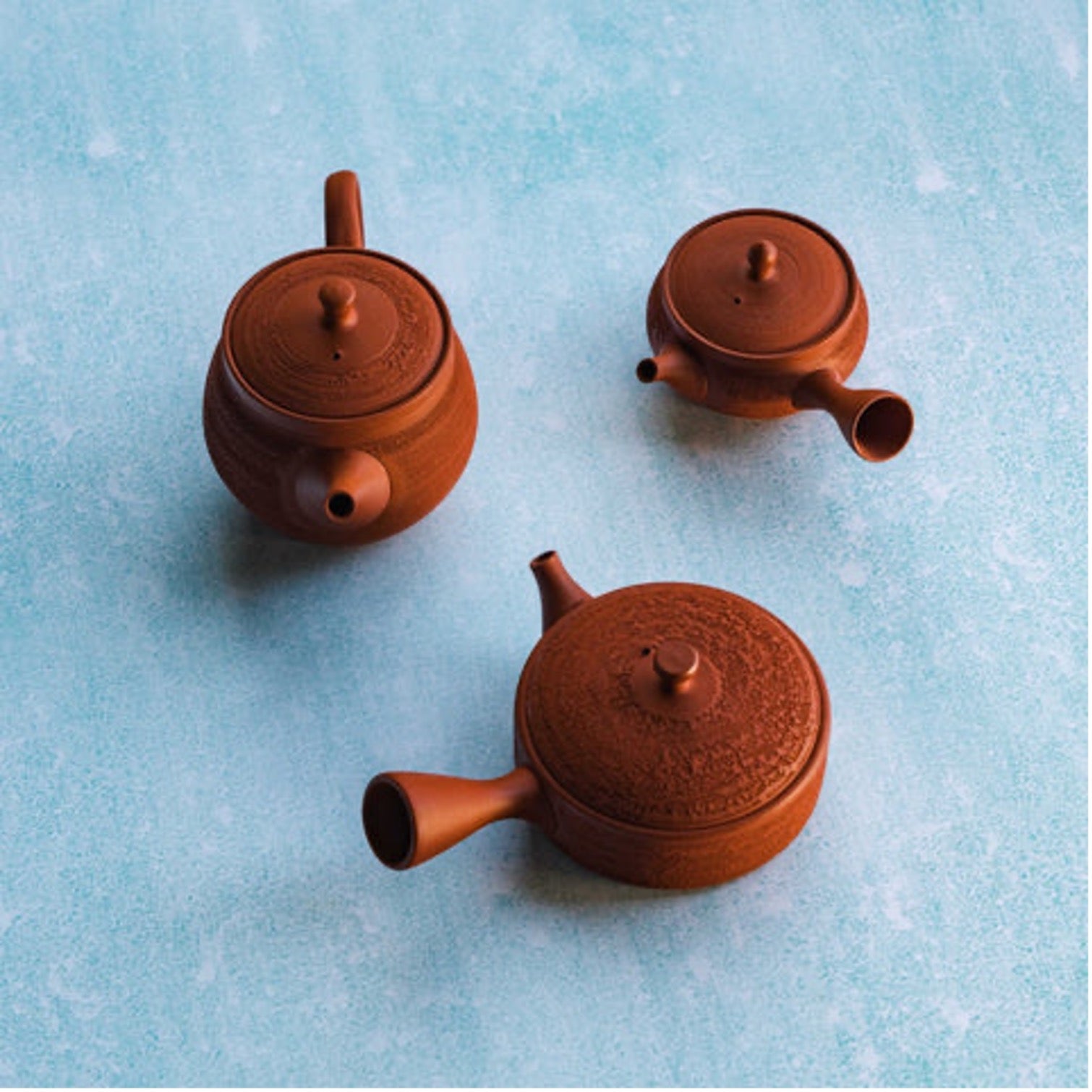
Article: When Clay Becomes Language: Japanese Ceramic Techniques Across Centuries

When Clay Becomes Language: Japanese Ceramic Techniques Across Centuries
In our previous journal, we explored the rich history of Arita Ware—its origins, its global influence, and its enduring role in Japanese ceramic culture.
Now, it’s time to look closer.
Icchin Technique — Drawing with Clay
Icchin (イッチン)has been a pottery technique stretching back thousands of years in Japan influenced by Chinese and Korean pottery traditions. The Icchin potteries we see today have been reinvigorated in the early 20th century when the Mingei folk craft movement introduced English slip-trailing techniques to Japanese artists, who then developed their own distinctive style.
The easiest way to understand this technique is – imagining decorating a cake with frosting and you are using liquid clay to draw patterns on pottery. Artisans dissolve clay in water to create a smooth paste, then squeeze it through a bag-like tool onto the surface of vessels, creating raised, sculptural patterns that feel as beautiful as they look. Unlike flat painted designs, icchin gives pottery a plump, tactile quality that invites you to run your fingers across its surface.

Hotarude (蛍手)
Hotarude also known as Suishōbori, it's a Japanese pottery technique where intricated patterns are carved into ceramic, the small holes filled with a transparent glaze and then fired, creating translucent areas that glow like fireflies(hotaru) when held into the light, offering an elegant interplay of light and shadow. The technique was originated in Ming Dynasty China, called Linglong or So-kin, however it has been perfected in Japan.
The difficult part of this technique is that the glaze is needs to cover the holes in the porcelain, making it susceptible to cracking. If the porcelain is too thick, it is a struggle to penetrate the hole, and if it is too thin, the glaze does not fill the hole well and the piece does not look translucent.
 (Arita Ware Crystal-Carved Hanazume Tea pot)
A forgotten name Higuchi may be the best representation of this technique. According to the article from Taliesin Antiques, Higuchi exhibited his porcelain at the World’s Columbian Exposition in Chicago where reporter has described his work as a grounding breaking Japanese’s interpretation of the Chinese “grains of rice” technique. While Chinese potters had used this method decoratively, Higuchi elevated it, carving plum blossoms in such details that even the veining and stamens of the petals were preserved in transparency. However, only few his works survived and held in museum collections in Tokyo and Takeo.

Bunzen Kiln
Bunzan is an Arita Ware pottery founded in 1953.
Bunzan has the only Arita ware tunnel kiln in existence in its studio located on a hill overlooking the countryside. Using the kiln, the pottery has produced various long-selling products that have opened a new frontier for Arita ware, with its history of 400 years, including hotarude (ceramics with transparent patterns), tebineri (hand-twisted ceramics) and peony-patterned ceramics with a platinum rim(Icchin).

(Arita Ware Bunzan Kiln Peony Mug – Blue & Gold)
With the techniques that has passed down for 3 generations, Masatoshi Nakajima developed and produced another ceramic brand – ‘ceramic mimic fabric’. They are cloth-like vessels that feel as comfortable as holding finest linen. From looking at the vessel, you would never guess it is porcelain, because it is so thin and light that weights half as much as regular tableware.

In 2020, ceramic mimic fabric was awarded the Gold Award at Omotenashi Selection 2020, as an item that is “full of uniquely Japanese charm that we want to share with the World”.
As we continue to curate Japanese ceramics, we hope not only to share beautiful objects, but also the stories, histories, and techniques that give them life. Please follow our website or social channels for updates on the arrival of Bunzan Kiln’s ceramic mimic fabric collection, a remarkable body of work we are eagerly awaiting and excited to share with you.