The Living Earth of Tokoname: Where Clay Becomes Art
Nestled along the coast of Aichi Prefecture lies Tokoname, a town whose heartbeat has echoed through the kilns for over a thousand years. Known as one of Japan’s Six Ancient Kilns, Tokoname has shaped not just clay, but also the soul of Japanese tea culture. From the Heian period (794–1185) to today, the town’s potters have drawn from the rich, iron-laden earth beneath their feet—turning local soil into warm, reddish-brown ceramics that speak of both strength and serenity.

The Magic of Tokoname Clay
Unlike other pottery regions, Tokoname’s locally sourced clay is truly exceptional. Its natural composition allows craftsmen to fire at lower temperatures without glaze, while still achieving remarkable water resistance—a rare trait for earthenware. For Tokoname artisans, the clay itself is the heart of creation. Its color defines the piece, revealing the artistry not through added decoration but through the life and depth of the earth itself.
Shades of Tokoname: The Colours of Clay
Shudei (朱泥 – Vermilion Clay)
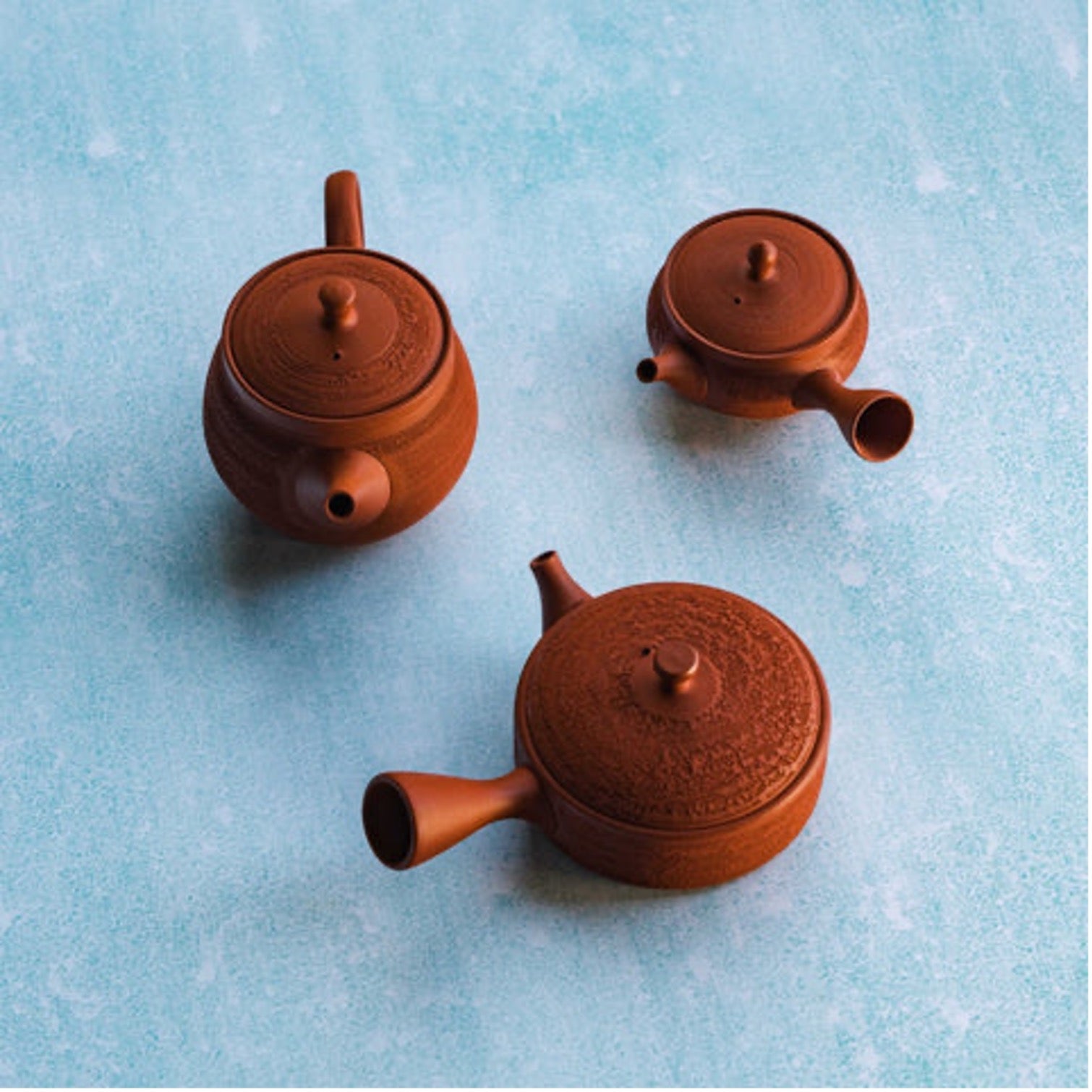
The most iconic of Tokoname clays, Shudei glows in tones of bright scarlet to gentle orange-red, its hue born from a high iron content that turns vivid when fired in oxygen-rich kilns. Historically, true honshudei came from the prehistoric Lake Tokai bed and was prized for enhancing the flavor of tea. In the 19th century, Tokoname potters shaped this clay into teapots inspired by Chinese Yixing ware. Though honshudei has become rare today, its legacy continues through carefully formulated modern clays that capture its warmth and character.

Kokudei (黒泥 – Black Clay)
The deep, mysterious tones of Kokudei emerge in two ways: by dyeing the clay black, or by firing Shudei in a reducing atmosphere. In reduction, oxygen is limited, and carbon monoxide (CO) interacts with iron in the clay, stripping away oxygen and turning the surface a rich dark brown or black. The resulting pieces are shadowed with natural soot and smoke, giving each vessel a quiet, meditative depth.

Ryokudei (緑泥 – Green Clay)
For a striking contrast, Ryokudei, or green clay, gains its color from added cobalt. When fired in an oxidizing environment, the cobalt yields hues that range from forest green to soft green-grey, depending on the firing conditions. These serene greens add a refreshing tone to Tokoname’s earthy palette, reminiscent of moss on old stone teapaths or pine needles after rain.

Nerikomi (練り込み – The Art of Marbling)
More than a clay type, Nerikomi is a technique—a dance of earth and hands. By kneading various colored clays together, artisans create marbled patterns that swirl like agate or flowing water. Some pieces use just two clays for bold spirals; others weave four or five tones into intricate layers. Artists often carve into the surface, revealing hidden strata of color that tell the story of the clay’s journey through motion and fire.

The Hands Behind the Clay: Takumi Hotta
Among the many artisans keeping Tokoname’s spirit alive is Takumi Hotta, a pottery artist from Kenji Tousen—the studio behind some of our most cherished teacups and pots. Interestingly, Kenji Tousen began not with teapots but tile sinks. It was only after a client’s encouragement that the studio turned its hands toward tea utensils, finding its true calling in teapots that embody both tradition and quiet innovation.

One of Hotta’s creations, a Nerikomi teapot, beautifully illustrates this philosophy. Its marbled design emerges from natural twists of colored clay, while the tea strainer, made from the same fine white clay and hand-drilled hole by hole, showcases extraordinary craftsmanship. Over time, the teapot develops a deeper color and luster, reflecting every pour, every shared moment of tea.

A Living Heritage
Tokoname ware is more than pottery—it is living earth shaped by human touch, a bridge between Japan’s past and its present. Each vessel carries not only the warmth of the kiln but the story of a place where clay, fire, and spirit continue to meet in quiet perfection.